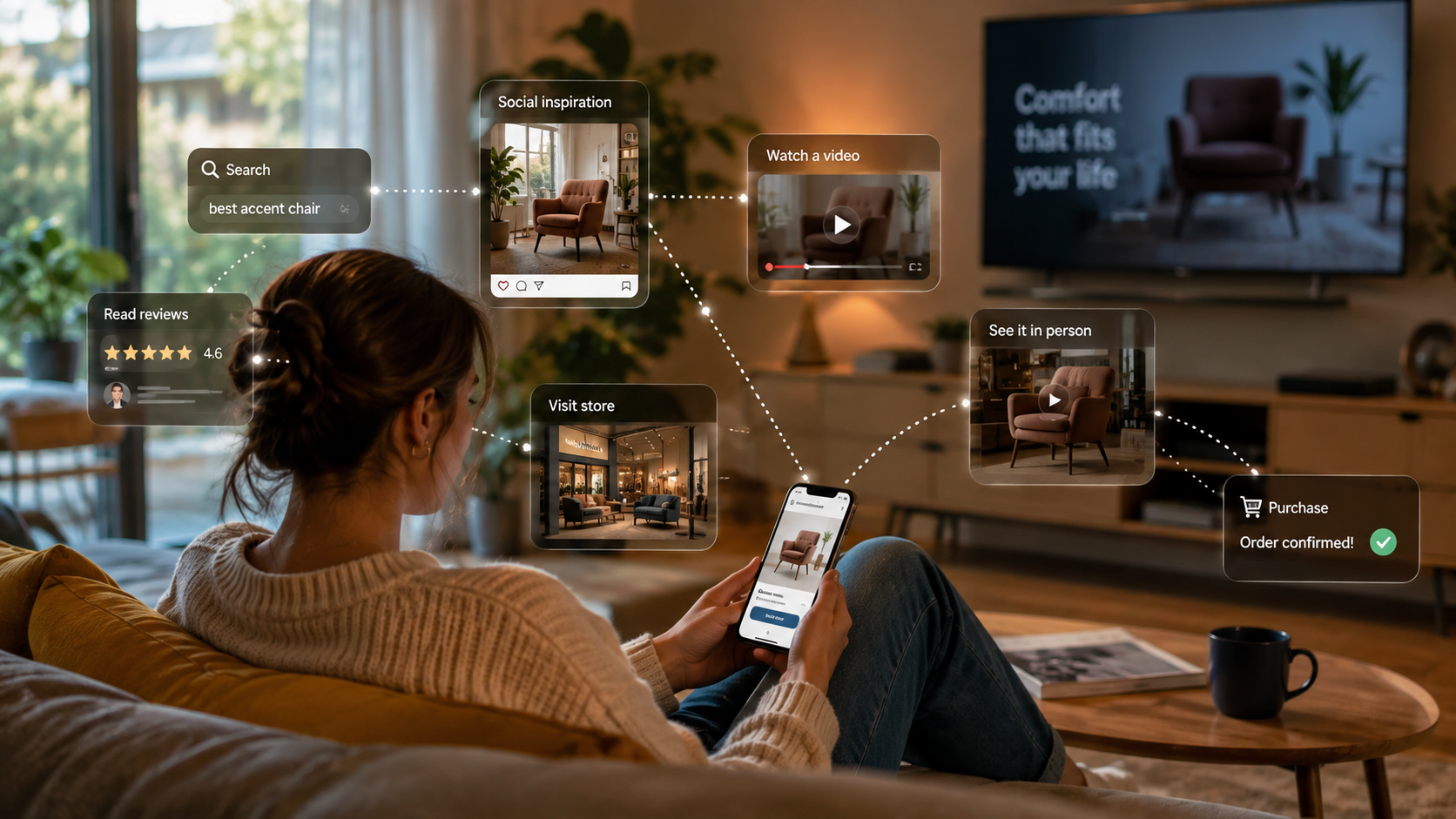
Retail media has traditionally been associated with brands promoting the products they sell within a retailer’s own assortment. A consumer searches for a television and sees another television brand. Someone browses coffee machines and encounters different coffee machine manufacturers. This is the foundation of retail media—and it continues to deliver strong results.
However, one of the fastest-growing opportunities in the industry lies beyond this traditional approach: non-endemic retail media.
What is non-endemic retail media?
Non-endemic brands are advertisers that use retail media to engage consumers during relevant shopping journeys, even though their products or services are outside the retailer’s core assortment or the category being browsed.
Non-endemic retail media allows brands to reach consumers even when their products are not part of the retailer’s assortment or the category being browsed.
Instead of advertising a competing product, brands engage shoppers whose purchase journey signals a relevant need, lifestyle, or future intention.
This transforms retail media from a product advertising channel into an intent-based marketing platform, where brands can communicate with consumers precisely when they are making important purchasing decisions.
Consumer intent creates new advertising opportunities
Every purchase tells a story.
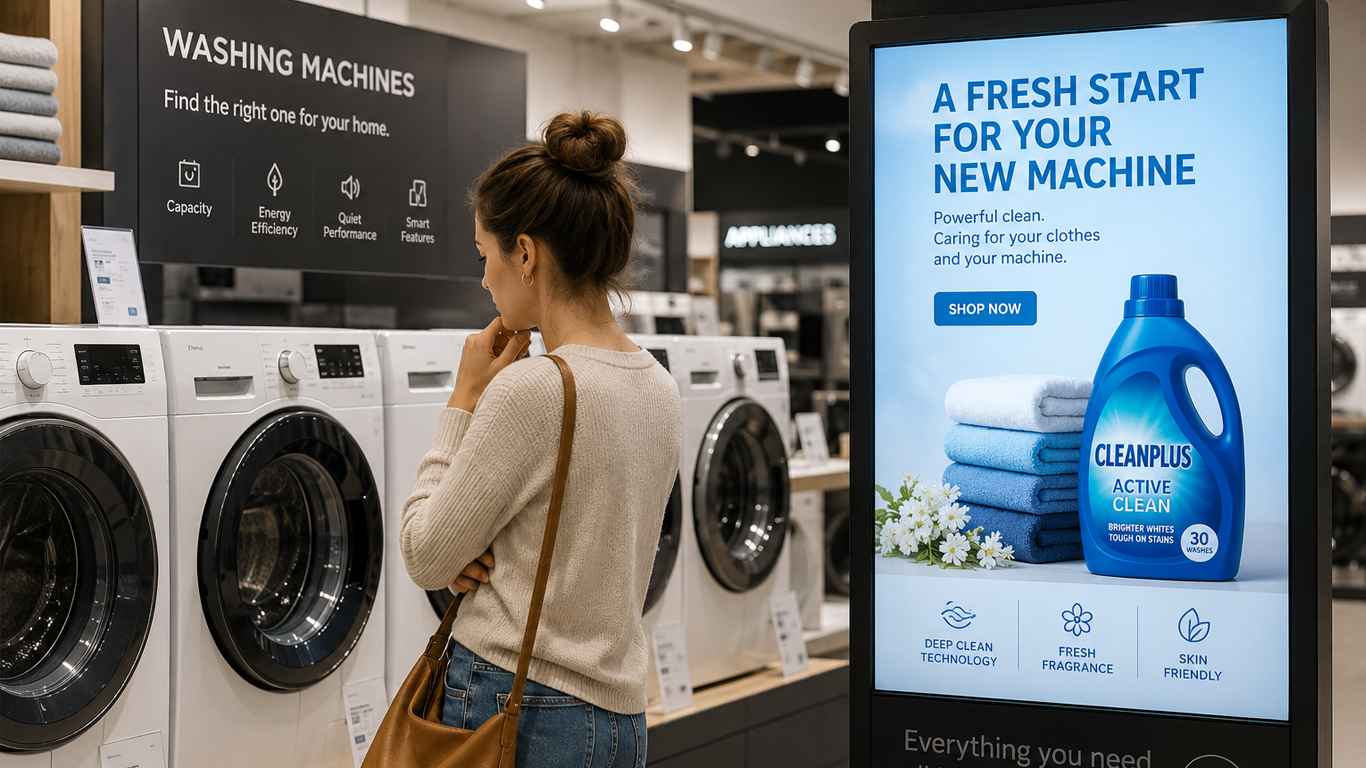
For example, buying a washing machine often means someone is moving into a new home, replacing an ageing appliance, or upgrading their household.
That single moment opens the door for many complementary brands:
- Laundry detergents
- Fabric softeners
- Stain removers
- Home insurance providers
- Energy companies
- Telcos
- Cleaning products
- Smart home solutions
- Extended warranty services
None of these products compete with the washing machine itself.
Yet all are highly relevant to the consumer’s immediate needs.
The same principle applies across virtually every retail category. Rather than focusing on the product itself, brands participate in the context surrounding the purchase.
Again, as examples:
Purchasing a new TV
Streaming services, gaming platforms, broadband providers, sound systems etc.
Shopping for a baby stroller
Insurance, banking, baby nutrition, healthcare providers etc.
Buying theater tickets to children plays
Child nutrition, family telco programs, educational institutes etc.
Purchasing a laptop
Software companies, cloud storage, cybersecurity, education platforms
Why it works
Unlike traditional digital advertising, retail media is powered by real shopping behavior rather than inferred interests.
Consumers are actively researching, comparing, and making purchase decisions.
This creates three major advantages.
- Higher relevance
Advertising appears within a context that naturally aligns with the consumer’s current needs. A detergent message shown while someone is purchasing a washing machine feels considerably more relevant than the same advertisement appearing randomly across the web. - Stronger purchase intent
Retail environments capture consumers when their buying mindset is at its highest.
Rather than interrupting entertainment or social browsing, brands become part of the decision-making process. - Better advertising efficiency
Intent-driven targeting reduces wasted impressions and reaches the right target.
Brands focus on consumers who are significantly more likely to be interested in their products, improving campaign performance while reducing unnecessary media spend.
Retail media becomes a full-funnel channel
The evolution of retail media means it is no longer limited to driving sales within a single category.
It now supports objectives across the entire marketing funnel:
- Building brand awareness
- Launching new products
- Driving consideration
- Influencing purchase decisions
- Supporting customer acquisition
- Creating cross-category partnerships
For many advertisers, retail media has become one of the few environments where context, intent, first-party data, and measurable outcomes come together in a privacy-conscious way.
The future is about moments, not categories
As retailers continue to develop richer first-party data and smarter audience capabilities, advertising opportunities will increasingly be defined by consumer intent rather than product categories.
Brands will no longer ask:
“Can I advertise because my product is sold here?”
Instead, they’ll ask:
“Is this the right moment to reach this customer?”
Every meaningful purchase journey and every consumer that the retailer reaches creates new opportunities for complementary brands to become part of it, delivering more relevant experiences for consumers and more effective marketing for advertisers.
Image generated by AI