As advertising has become increasingly digital, it is easy to think of the physical store primarily as the place where a media journey ends. The advertising happens elsewhere; the transaction happens in-store. That view underestimates what a physical store actually is.
A physical store is not simply a point of sale.
It is an environment where consumers discover, compare, ask questions, seek reassurance, experience products and make decisions. People are not merely exposed to communication there. They are actively evaluating choices. The store is not simply a place that contains media. The store itself is a medium.
Everything in a store communicates
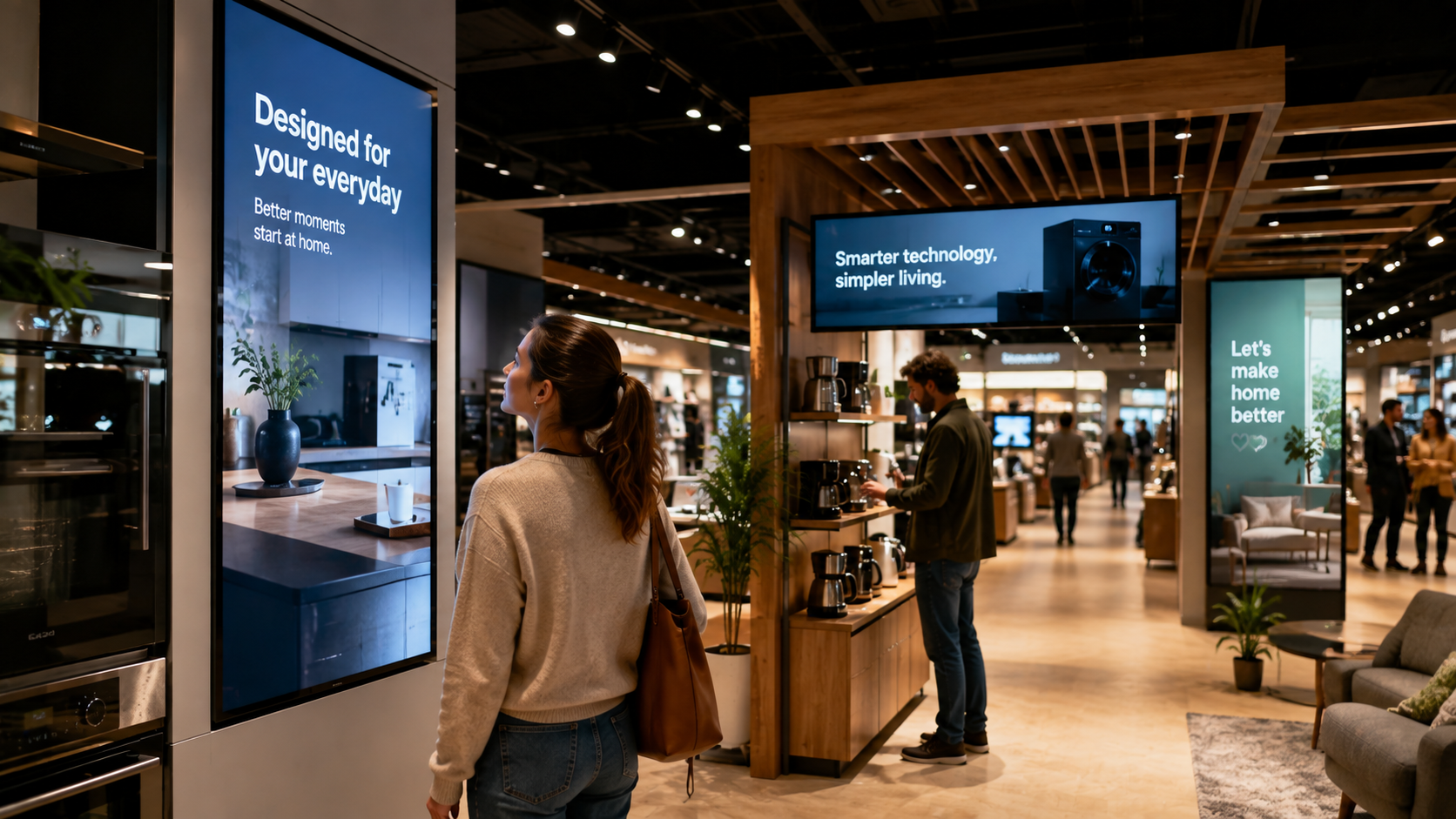
Thinking about store-as-a-medium requires moving beyond the idea that in-store retail media means placing digital screens around a retail environment.
Screens can be important, but they are only one interface.
Location communicates. Product placement communicates. Shelf position communicates. Displays, demonstrations, audio, promotions, complementary products and sales advisors all influence how consumers perceive and evaluate what is in front of them. Even the architecture and flow of the store affect what shoppers notice, where they spend time and which alternatives they encounter.
The media opportunity therefore begins with a different question. Not simply: Where can we place an advertisement? But: Where in the shopping experience can communication meaningfully contribute to a decision?
Context changes the value of an impression
Consider the same consumer seeing an advertisement for a washing machine on a news website, during a television programme, on a digital out-of-home screen and inside the washing-machine department of an electronics retailer. It could be the same person, the same brand and even the same creative. But these are not equivalent impressions.
In the store, the environment itself provides context.
The consumer is physically present in a place dedicated to the category, potentially comparing products, prices, features and alternatives. That does not guarantee an intention to purchase. But it changes the meaning of the exposure.
Audience tells us who we may be reaching. Context tells us what that exposure may mean. Intent tells us why the moment may matter.
This is one of the distinctive strengths of retail media. Traditional media can be extremely effective at communicating on a scale. Retail environments add powerful layers of context and commercial intent. Physical retail can bring all three together: audience, context and intent.
The store also creates time for communication
There is another dimension that makes the physical store different from many media environments: time. A store visit is not a fleeting impression. Depending on the category and shopping mission, consumers may spend several minutes or considerably longer browsing, comparing products, waiting for assistance, testing alternatives or simply moving between different areas of the store.
Within that visit there are also periods of idle or dwell time — moments when the shopper is waiting, walking, considering or looking around without being fully occupied by another task. For media, these moments matter. A message does not necessarily have one brief opportunity to attract attention; it can exist within the consumer’s environment for a meaningful part of the visit and potentially be encountered more than once.
This changes what in-store communication can do. It has time not only to generate awareness, but to explain, demonstrate, remind and reinforce. A shopper may notice a brand when entering the store, encounter it again while exploring the category and see a more specific message when standing closer to the product.
In a physical store, an advertisement can have something other (especially digital) media often struggle to secure: time to land.
The distance between communication and action becomes shorter
Physical retail also has something unusual in media: proximity to consequence.
A consumer may see a message and, within seconds, look at the product. They can compare it with another option, touch it, test it, ask someone about it, reconsider and place it in their basket.
The distance between exposure and action can literally be a few metres. This is why the value of in-store media is not created by the screen itself. A screen at the entrance, a screen beside a category and a screen next to a specific product may technically use the same technology, but they exist in completely different consumer contexts.
The important variables are where the communication appears, what the shopper is doing at that moment and which decision the message can help influence.
A store is not one media environment
For the same reason, it is misleading to treat an entire store as a single media placement.
The entrance, the category area, the aisle, the product display, the demonstration zone and the checkout represent different contexts. Each creates different opportunities for communication.
At the entrance, the consumer may be orienting or discovering. In a category area, they may be exploring options. In front of a product, comparison and validation become more important. At a demonstration point, experience can replace explanation. Near checkout, convenience, reminder and complementary purchase may become more relevant.
These should not be treated as fixed funnel stages. The same shopper may move between them in unpredictable ways. They are better understood as different contexts in which particular decision needs become more likely.
Physical retail can resolve uncertainty
There is another reason the physical store remains important even as commerce becomes more digital: some questions are easier to answer physically.
Consumers may want to see the actual size of a television, feel the material of a sofa, try a beauty product, sit inside a car, test a device, compare colours in real conditions or speak to someone who understands the category.
For many purchases, physical experience provides a form of validation that a digital impression cannot fully reproduce.
The store does not merely provide another advertising touchpoint. It can resolve uncertainties that advertising itself created but could not answer.
The development of retail media makes it possible to think about physical retail differently.
Instead of viewing stores as the offline endpoint of a digital journey, they can be understood as part of the media journey itself: measurable environments where audiences, context, communication and commerce come together.
That does not mean filling stores with more advertising. In fact, the opposite is probably more valuable. The opportunity is to make communication more relevant to the environment and more useful to the decision being made.
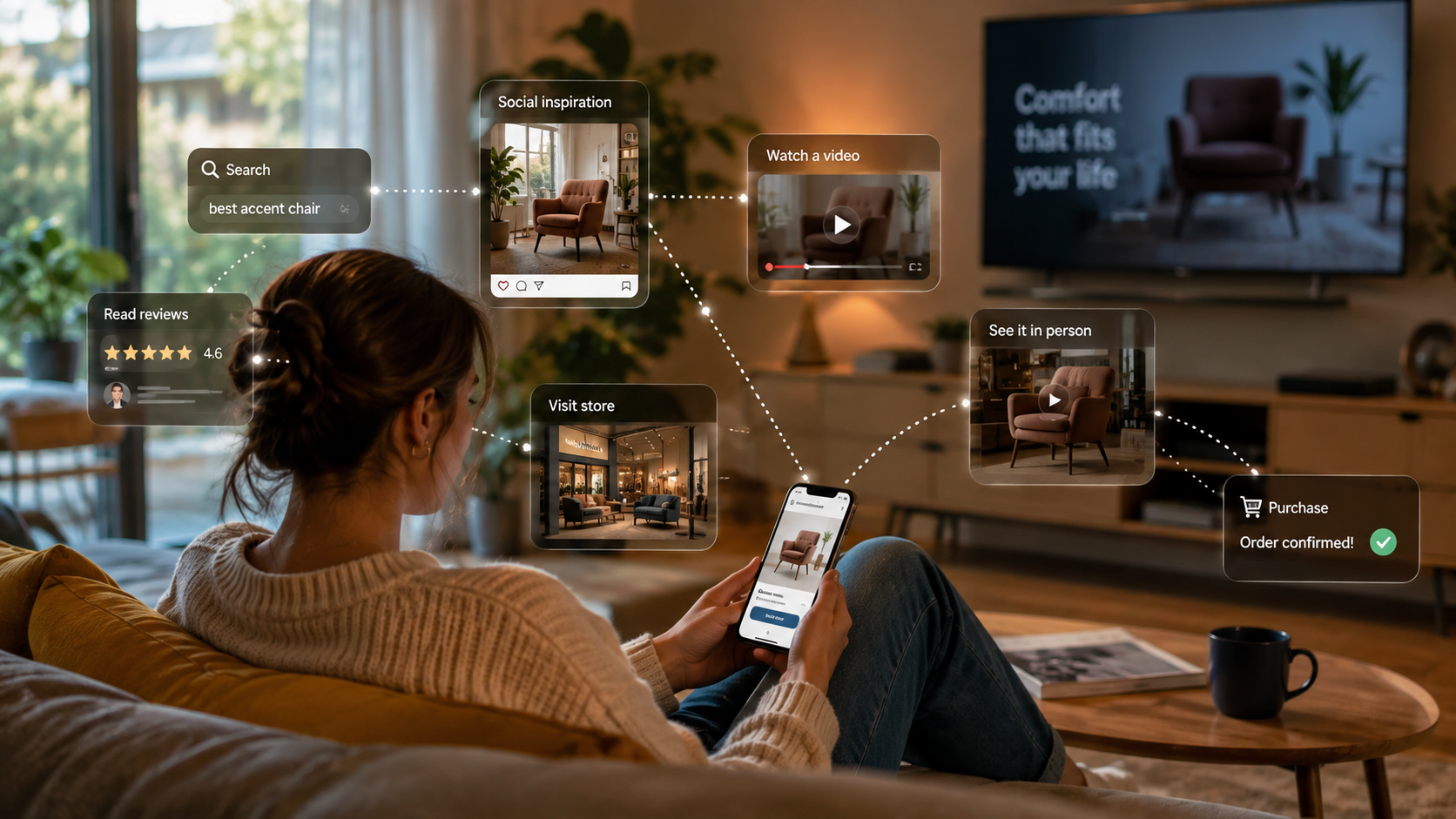
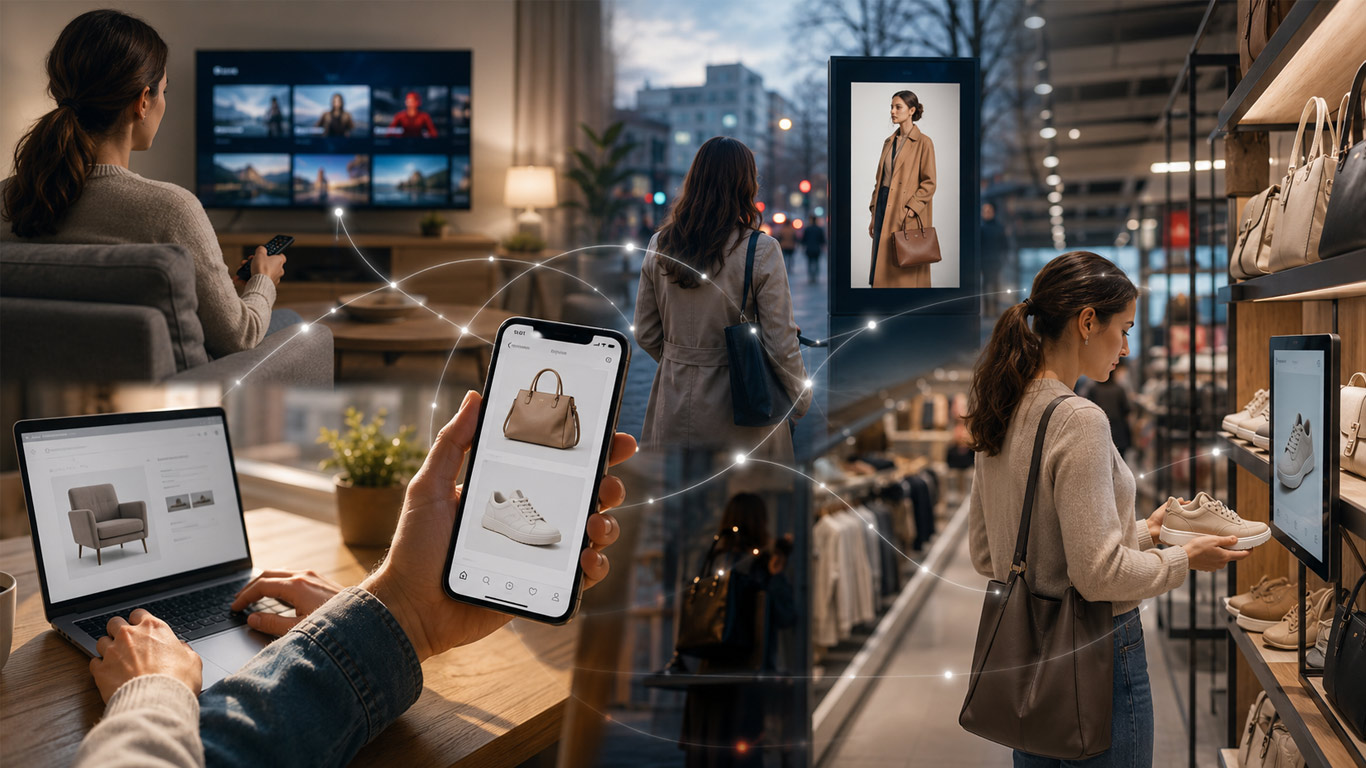
As customer journeys become increasingly connected, the distinction between online and offline matters less. Consumers move between screens, stores, conversations, search, content and commerce without respecting the boundaries of our media plans.
The question for retail media is therefore no longer simply how to bring digital advertising into physical stores. The more interesting question is how to treat the store itself as a medium.
Because when communication appears in the right physical context, close to the product and close to a real consumer decision, an impression can become far more than an opportunity to be seen. It can become part of the decision itself.